What Can My Pet Eat? A Guide to Safe and Toxic Foods
While we often consider our pets as members of the family, it is important to remember that their digestive systems are vastly different from ours. Many foods that are perfectly healthy for humans can be toxic, or even fatal, to dogs and cats. Understanding what is safe to share and what belongs strictly in the trash is a vital part of responsible pet ownership.
Most pet toxicities occur accidentally when a pet finds “human food” on a countertop or receives table scraps that contain hidden ingredients. While some foods cause immediate distress, others can cause long-term internal damage that may not be visible right away. Being proactive about their diet is the best way to ensure a long, healthy life for your furry companions.
- Common Household Toxins
- What Dogs Can and Cannot Have
- What Cats Can and Cannot Have
- Safe Treat Alternatives
- What to do in an Emergency
1. Common Household Toxins
There are several “universal” no-gos that apply to almost all household pets. The most dangerous include Xylitol (an artificial sweetener found in sugar-free gum and some peanut butters), which causes a life-threatening drop in blood sugar and liver failure. Chocolate and Caffeine contain methylxanthines that can cause tremors, seizures, and heart arrhythmias. Additionally, Grapes and Raisins are known to cause acute kidney failure in dogs, and while the evidence in cats is anecdotal, veterinarians strongly advise keeping them away from felines as well.
2. What Dogs Can and Cannot Have
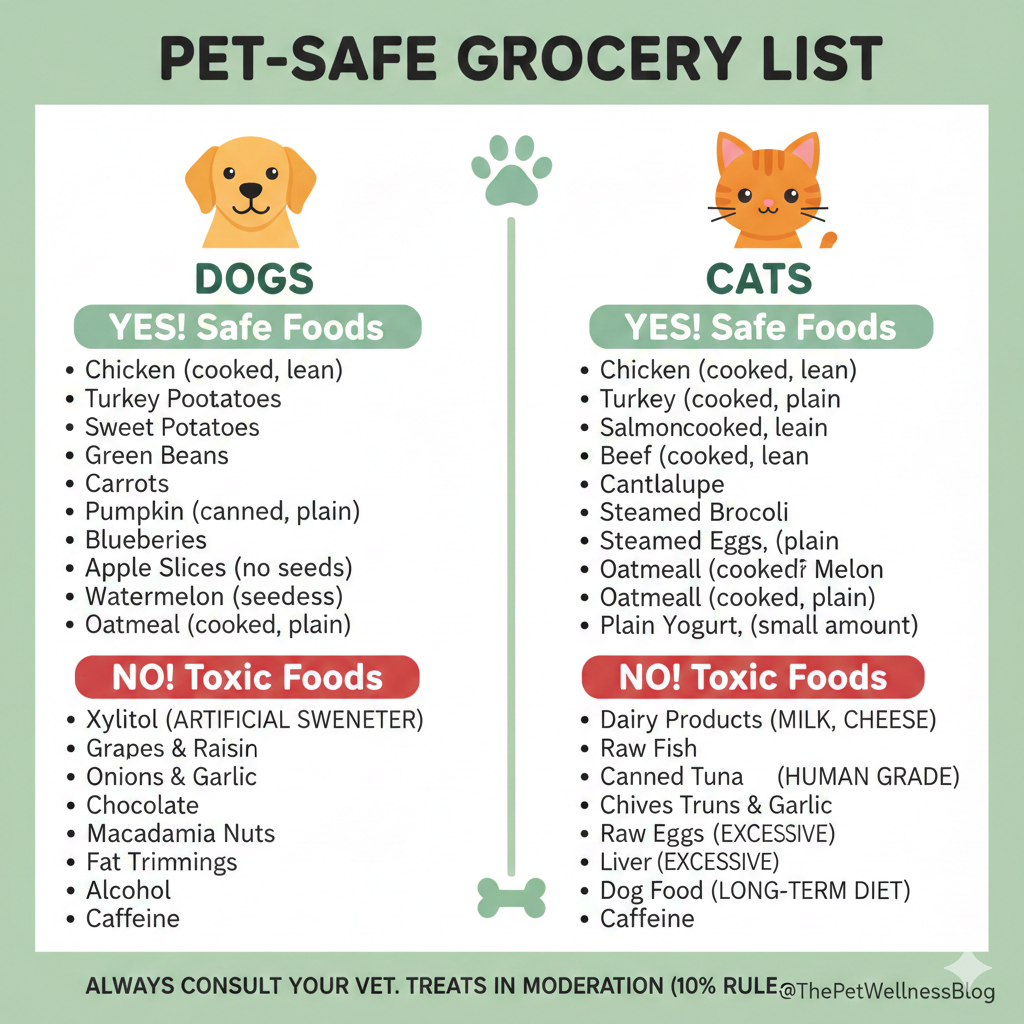
Dogs can enjoy a variety of human foods as healthy supplements to their diet. Safe options include lean meats like boiled chicken or turkey (without skin or seasoning), plain white or brown rice, and many vegetables like carrots, green beans, and cucumber slices. Fruits such as blueberries, bananas, and seedless watermelon are also great low-calorie snacks. However, even when feeding “safe” foods, you must avoid the following:
- Xylitol: Found in sugar-free candy and peanut butter; causes rapid liver failure.
- Grapes & Raisins: Even small amounts can lead to acute kidney failure.
- Onions & Garlic: Damages red blood cells, leading to anemia.
- Chocolate: Contains theobromine which affects the heart and nervous system.
- Macadamia Nuts: Causes “Macadamia toxicosis,” resulting in hind-leg weakness.
- Cooked Bones: Brittle and sharp; can puncture the stomach or intestines.
- Fat Trimmings/Bacon: Extremely high fat content can trigger Pancreatitis.
- Avocados: Contain persin, which can cause vomiting and diarrhea.
- Caffeine: Coffee grounds or tea can cause dangerous heart palpitations.
- Alcohol: Causes severe respiratory distress and tremors.
- Peach/Plum Pits: Contain cyanide and pose a significant choking/blockage hazard.
- Raw Bread Dough: Expands in the stomach and can lead to ethanol poisoning.
- Excessive Salt: Can lead to salt-ion poisoning and seizures.
3. What Cats Can and Cannot Have
Cats are obligate carnivores, meaning they thrive best on animal-based proteins. Safe treats for cats include small amounts of cooked fish, cooked beef, or plain scrambled eggs. Some cats even enjoy small pieces of steamed broccoli or cantaloupe. While they are often depicted drinking milk, most adult cats are actually lactose intolerant. To keep your cat safe, avoid these specific items:
- Dairy Products: Most cats are lactose intolerant; milk causes severe diarrhea.
- Raw Fish: Contains an enzyme that destroys Thiamine (Vitamin B1).
- Tuna (Canned): Can lead to malnutrition and mercury poisoning if fed regularly.
- Onions, Garlic & Chives: Even in powder form, these are highly toxic to feline blood cells.
- Dog Food: Lacks Taurine; if fed long-term, it causes heart and vision failure.
- Raw Eggs: Risk of Salmonella and contains avidin, which hinders B-vitamin absorption.
- Grapes/Raisins: Though less common than in dogs, they should be strictly avoided.
- Liver (Excessive): Can lead to Vitamin A toxicity, affecting bones and joints.
- Fatty Scraps: Just like dogs, cats can develop painful Pancreatitis.
- Chocolate: While cats rarely seek out sweets, chocolate is still highly toxic.
- Yeast Dough: Can cause painful gas and internal expansion.
- Energy Drinks: The high caffeine content is fatal for small cats.
4. Safe Treat Alternatives
If you want to share a snack with your pet, stick to plain, unseasoned options. Remember the “10% Rule”: treats should never make up more than 10% of your pet’s daily caloric intake. Always introduce new foods in very small quantities to monitor for any allergic reactions or digestive sensitivities.
5. What to do in an Emergency
If you suspect your pet has ingested something toxic, do not wait for symptoms to appear. Time is of the essence. Immediately contact your veterinarian or a pet poison helpline. Be prepared to provide information on what was eaten, how much, and how long ago the ingestion occurred.
For more information about Pet Nutrition and Toxicity, visit:
ASPCA Poison Control (888-426-4435)
Pet Poison Helpline (855-764-7661)
AKC Human Food Guide
References:
McCurnin’s Clinical Textbook for Veterinary Technicians
ASPCA Animal Poison Control Center (APCC)
American Veterinary Medical Association (AVMA)
FDA Center for Veterinary Medicine
Disclaimer: This blog is meant to be used as a resource tool for pet owners, pet enthusiasts, and anyone who would like to understand a little bit more about how to better care for our pets. As with any information on the internet, please take it with a grain of salt, and always consult with your veterinarian to discuss the best course of action for your furry friend.